Funeral
A ceremony for final disposition of a corpse, varying by culture.

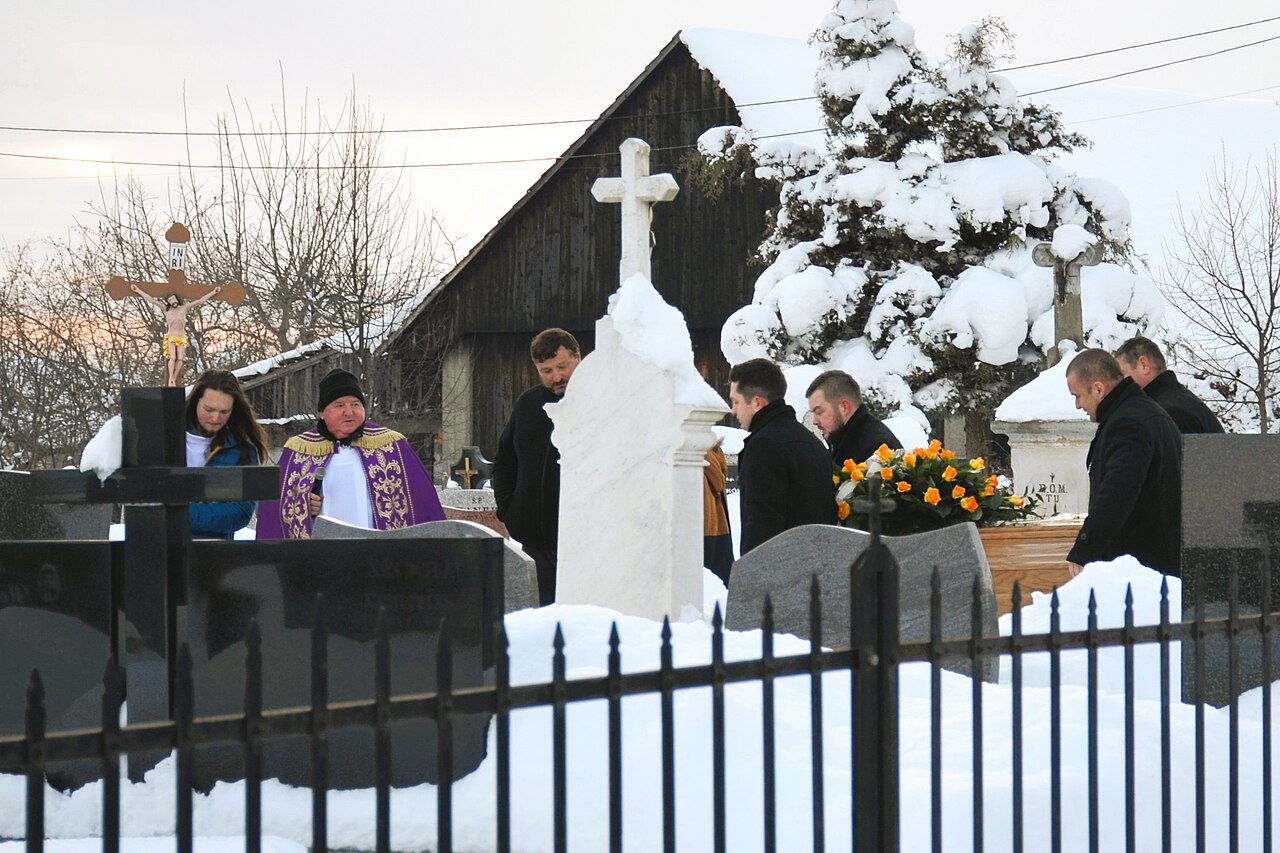
Silar · CC BY-SA 4.0
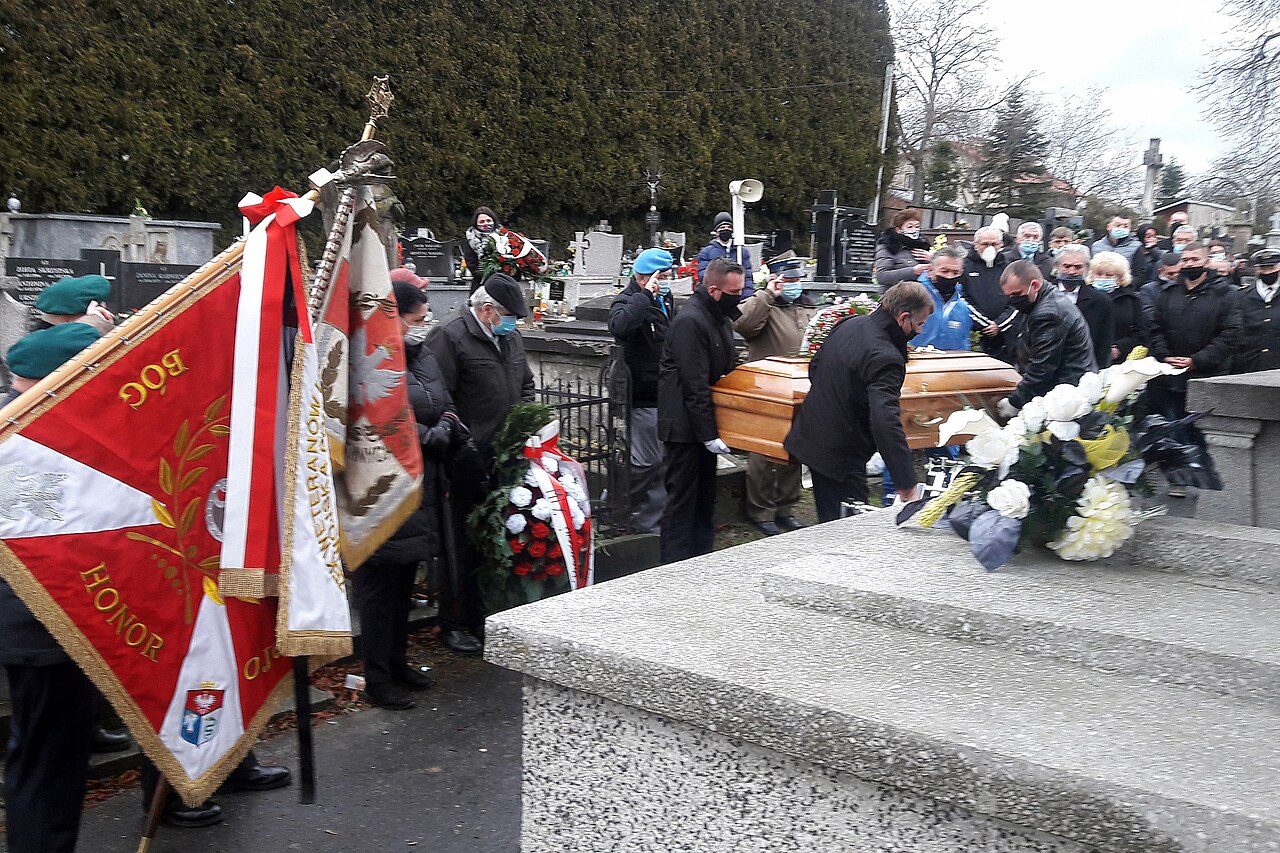
A funeral is a ceremony connected with the final disposition of a corpse, such as burial, entombment, or cremation, with attendant observances. Funerary customs comprise the complex of beliefs and practices used by a culture to remember and respect the dead, from interment to various monuments, prayers, and rituals. Customs vary between cultures and religious groups, and funerals have both normative and legal components.
- Etymology
- From Latin funus, meaning corpse and funerary rites
- Common venues
- Places of worship, funeral homes, cemetery chapels, crematoria
- Key components
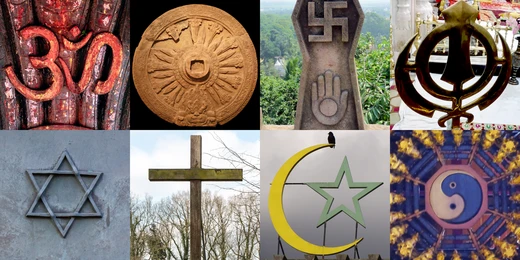
- Significant symbols, gathered community, ritual action, cultural heritage, transition of the dead body
Lore & Background
In Shanidar Cave in Iraq, Pontnewydd Cave in Wales, and other sites across Europe and the Near East, archaeologists have discovered Neanderthal skeletons with a characteristic layer of flower pollen. This deliberate burial and reverence given to the dead has been interpreted as suggesting that Neanderthals had religious beliefs, although the evidence is not unequivocal—while the dead were apparently buried deliberately, burrowing rodents could have introduced the flowers. Substantial cross-cultural and historical research documents funeral customs as a highly predictable, stable force in communities. Funeral customs tend to be characterized by five 'anchors': significant symbols, gathered community, ritual action, cultural heritage, and transition of the dead body. The funeral usually includes a ritual through which the corpse receives a final disposition, which can involve either destruction of the body (e.g., cremation, sky burial, decomposition) or its preservation (e.g., mummification).
Reader's Guide
Funerals serve both normative and legal functions across cultures. Common secular motivations include mourning the deceased, celebrating their life, and offering support and sympathy to the bereaved. Religious aspects may be intended to help the soul of the deceased reach the afterlife, resurrection, or reincarnation. The word funeral comes from the Latin funus, which had a variety of meanings, including the corpse and the funerary rites themselves. Funerary art is art produced in connection with burials, including many kinds of tombs and objects specially made for burial like flowers with a corpse. The most common venues for funeral services are places of worship or funeral homes. A memorial service or celebration of life is a funerary ceremony performed without the remains of the deceased. In both a closed casket funeral and a memorial service, photos of the deceased representing stages of life may be displayed on an altar, and relatives or friends may give eulogies.
Did You Know?
- The word funeral comes from the Latin funus, which meant both the corpse and the funerary rites.
- Neanderthal skeletons with flower pollen have been found in Shanidar Cave, Iraq, and Pontnewydd Cave, Wales.
- Funeral customs are characterized by five anchors: significant symbols, gathered community, ritual action, cultural heritage, and transition of the dead body.
Ancient Roots of the Ritual
The practice of formally laying a body to rest stretches far beyond the emergence of modern humans. Sites such as Shanidar Cave in Iraq and Pontnewydd Cave in Wales, along with other locations across Europe and the Near East, have yielded Neanderthal skeletons accompanied by a distinctive layer of flower pollen. Researchers have interpreted this careful arrangement and the presence of flowers as evidence that Neanderthals held some form of religious or spiritual belief regarding death. However, the interpretation remains debated. While the burials appear intentional, skeptics point out that burrowing rodents could have introduced the pollen into the sediment over time, meaning the floral evidence does not conclusively prove deliberate placement. What is clear is that the act of setting aside a corpse and treating it with a degree of reverence is among the oldest documented human behaviors, suggesting that the impulse to mark death with ceremony is deeply woven into our species' story.
A Mosaic of Sacred Practices
Across the world's faith traditions, funeral observances reflect profoundly different understandings of what happens after death. In the Bahá'í Faith, cremation is strictly forbidden, and the body must not be transported more than an hour's journey from where the person died. Before burial, the deceased is wrapped in silk or cotton, a ring bearing a specific prayer is placed on a finger, and the body is oriented with feet toward the Qiblih. In Buddhist traditions, the ceremony serves not merely as remembrance but as active assistance for the soul's passage into rebirth. Tibetan practitioners perform sky burials on mountaintops, where specialized body-breakers called rogyapas dissect the corpse and expose it to vultures, maintaining a deliberately cheerful demeanor to aid the departed's journey. Christian funerals, by contrast, have historically centered on consecrated ground and the expectation of bodily resurrection, though cremation has grown increasingly accepted even as some denominations still prohibit it. Each tradition encodes its own theology of the body, the soul, and what the living owe the dead.
Anatomy of the Ceremony
A funeral is far more than a single event; it is a structured complex of beliefs, rituals, and legal obligations that a culture uses to honor the departed. Scholars identify five recurring anchors that give funerary customs their stability across time and geography: meaningful symbols, the gathering of a community, prescribed ritual actions, the transmission of cultural heritage, and the physical transition of the corpse itself. The disposition of the body can take radically different forms—cremation, sky burial, natural decomposition, or preservation through mummification—each reflecting a community's beliefs about purity and the relationship between flesh and spirit. Beyond the physical rite, funerals carry both secular and spiritual purposes: mourning the loss, celebrating a life well lived, offering comfort to those left behind, and, in many traditions, guiding the soul toward an afterlife, resurrection, or new incarnation. A memorial service or celebration of life fulfills many of these roles without the physical remains present, while funerary art—tombs, burial objects, even flowers placed with the body—gives the ceremony a tangible, lasting dimension.
Where the Rite Takes Place
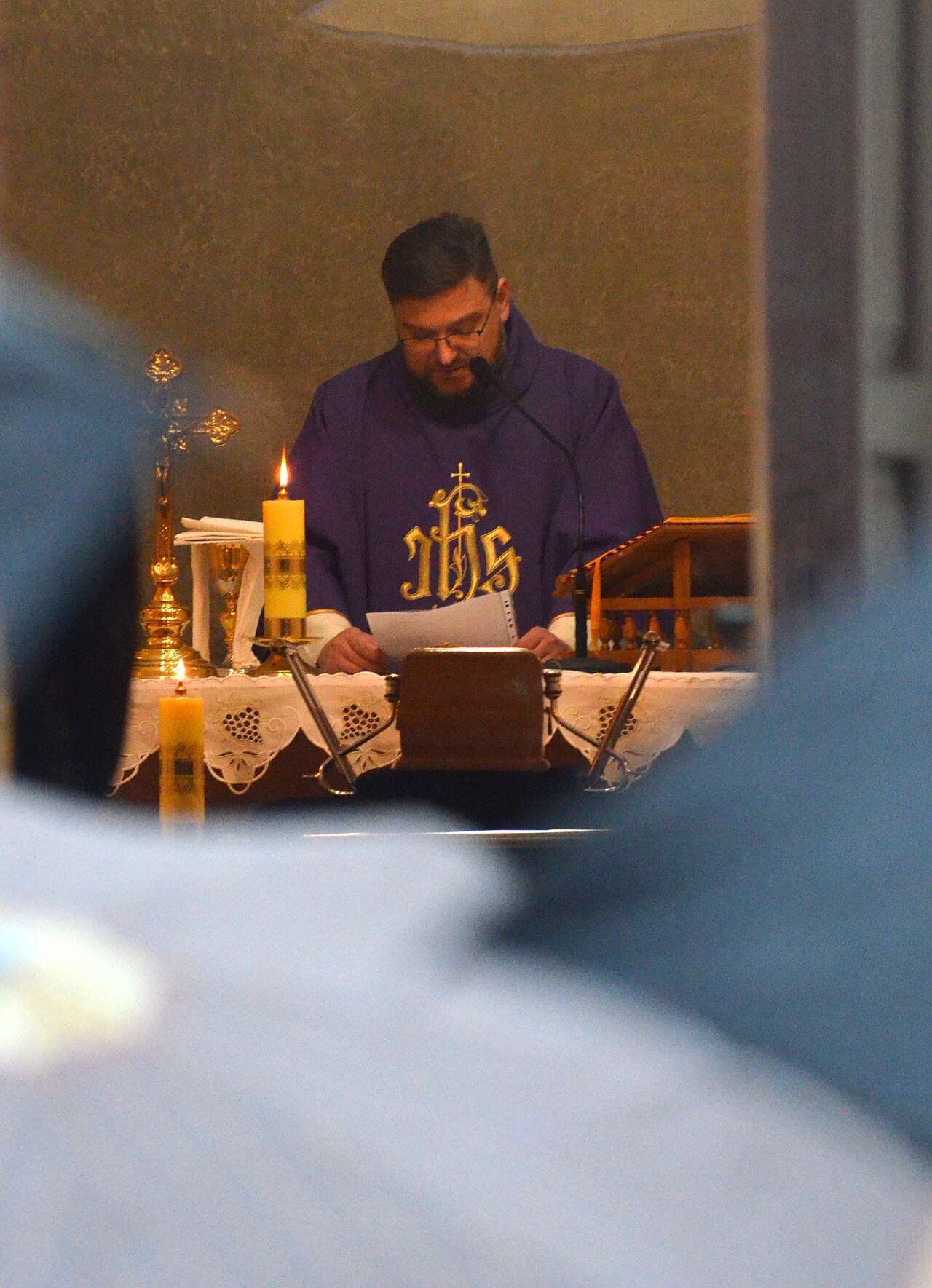
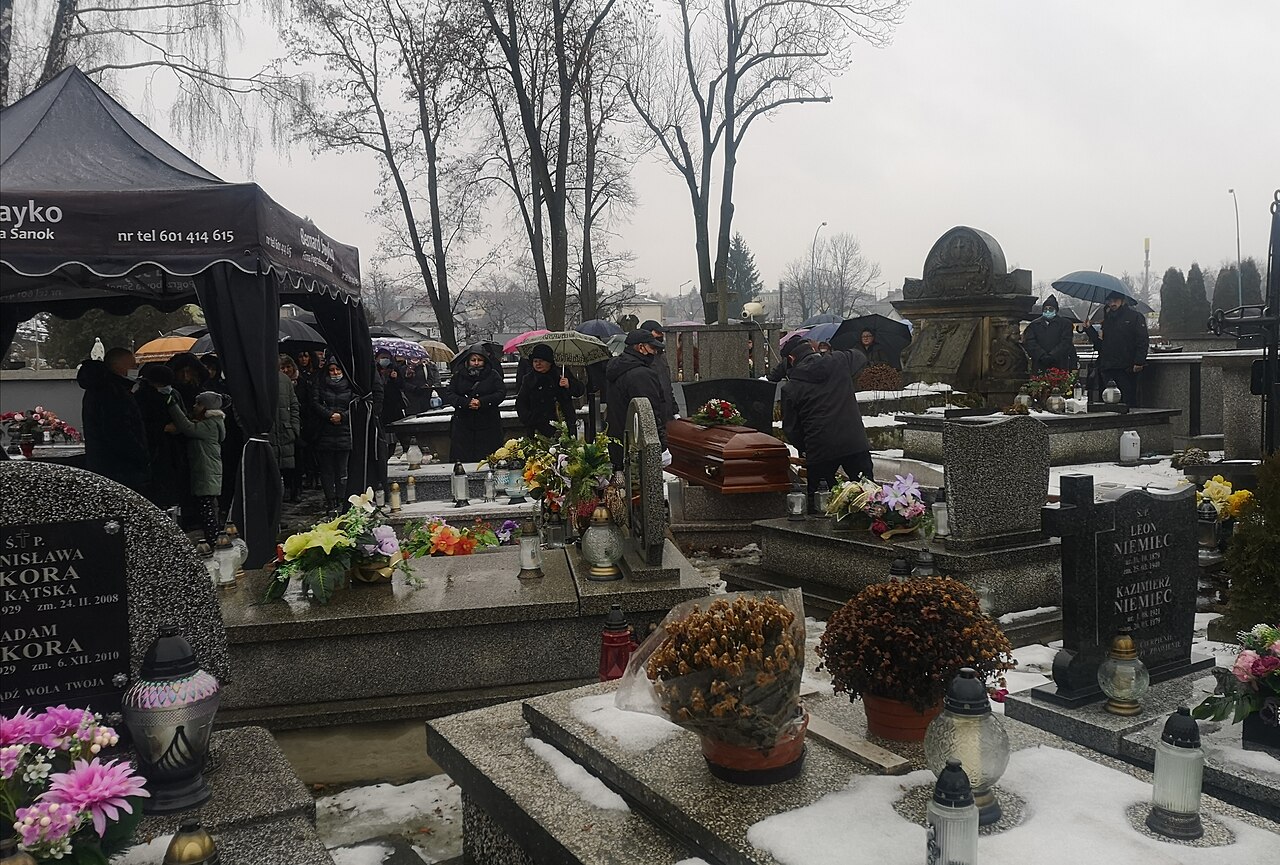
The physical setting of a funeral varies widely, yet a handful of venues dominate. Places of worship—churches, synagogues, and similar congregational spaces—remain among the most common locations, as do dedicated funeral homes. A cemetery chapel offers what is often described as a quiet, intimate atmosphere suited to clergy, grieving families, and friends, and it can accommodate both open- and closed-casket services before a traditional interment. For those whose final disposition is entombment, a mausoleum chapel serves as the primary venue, typically used after the main funeral has concluded. Graveside services, while less frequent, bring the ritual directly to the burial site. When cremation follows the service, the ceremony shifts to a crematorium. The word funeral itself traces back to the Latin funus, a term that encompassed both the physical corpse and the rites performed in its honor, a duality that still defines the practice today.
Gallery
Frequently Asked Questions
What is a Funeral?
A funeral is a ceremonial observance centered on the final disposition of a deceased person's body, whether through burial, entombment, or cremation. It encompasses the broader set of rituals, prayers, and community practices a culture uses to honor and remember the dead.
What are the key components of a Funeral?
A funeral typically involves significant symbols, a gathered community, ritual action, expressions of cultural heritage, and the physical transition of the deceased's body to its final resting place. These elements work together to mark the passage from life to death in a structured, meaningful way.
Where do Funerals usually take place?
Common venues include places of worship, dedicated funeral homes, cemetery chapels, and crematoria. The specific location often depends on the religious tradition and the family's chosen method of disposition.
What is the origin of the word 'Funeral'?
The term traces back to the Latin word 'funus,' which referred to a corpse and the associated funerary rites. This etymology underscores the deep historical link between the word and the practical handling of the dead.
Why is a Funeral considered important in religious and cultural life?
Funerals serve as a culture's primary framework for expressing respect, grief, and remembrance toward the deceased, carrying both normative (religious) and legal dimensions. They vary widely between faiths and societies, reflecting each group's unique beliefs about death, the afterlife, and communal obligation.
More in Religious Practices And Symbols 1-17
Spotted an error? Know more?
This is a living reference — every entry is fact-audited, and reader corrections feed straight into our audit queue. Suggest an edit · See this site's audit record