Church (congregation)
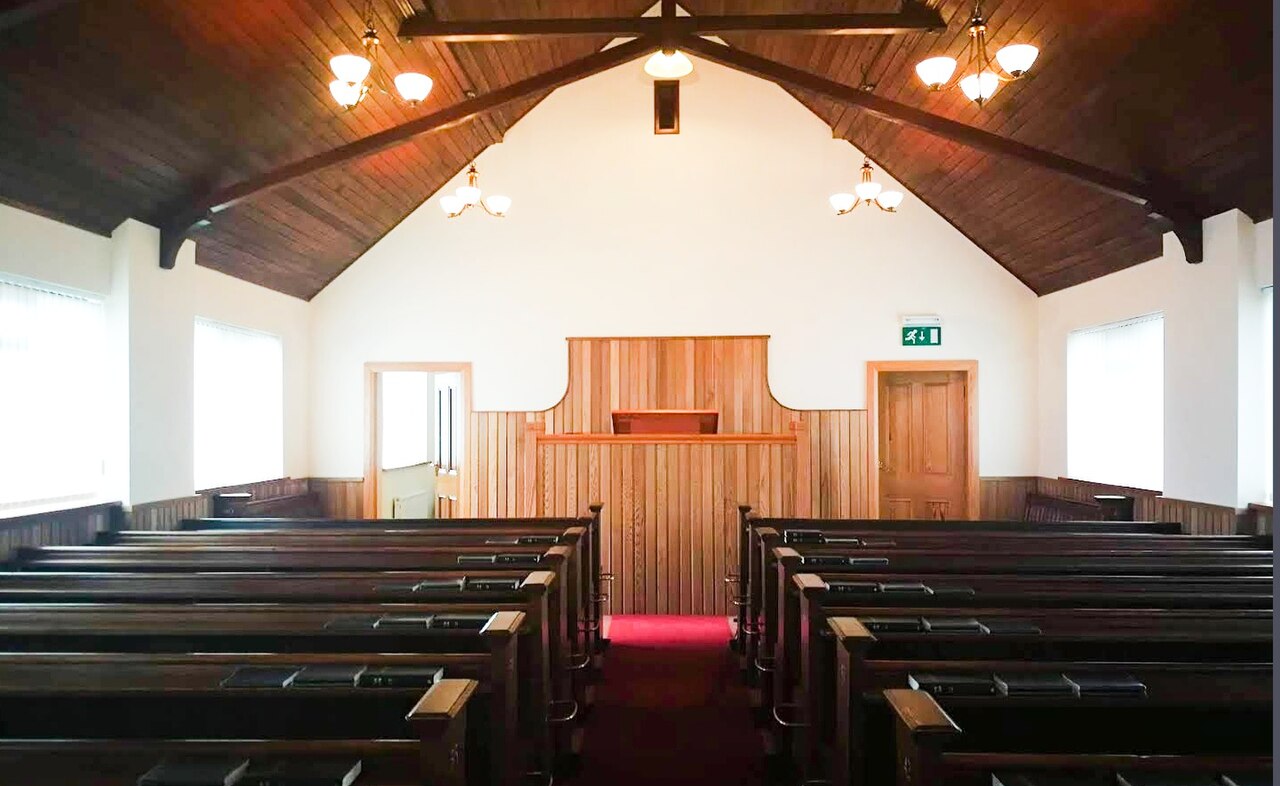
A local Christian congregation meeting for worship and ministry.

CnekYT · CC BY-SA 4.0
A local church is a Christian organization or congregation that meets in a particular location, often for worship. Many are formally organized, with constitutions and by-laws, maintain offices, are served by clergy or lay leaders, and, in nations where this is permissible, often seek non-profit corporate status. The term is distinct from the use of the word 'church' to mean a church building.
- Field
- Christian ecclesiology
- Known for
- Being the basic unit of Christian organization, meeting for worship and ministry
- Etymology
- From Greek ekklēsia ('called out') and kuriakē ('of the Lord')
- Polity types
- Congregational, presbyterian, episcopal, hierarchical
Lore & Background
The word church is used in the sense of a distinct congregation in a given city in slightly under half of the 200 uses of the term in the New Testament. John Locke defined a church as 'a voluntary society of men, joining themselves together of their own accord in order to the public worshipping of God in such manner as they judge acceptable to him.' The Greek word ekklēsia, literally 'called out' or 'called forth,' is the New Testament term referring to the Christian Church, either a particular local congregation or the whole body of the faithful. Local churches often relate with, affiliate with, or consider themselves to be constitutive parts of denominations. Depending on the tradition, these organizations may connect local churches to larger church traditions, ordain and defrock clergy, define terms of membership and exercise church discipline, and have organizations for cooperative ministry such as educational institutions and missionary societies. Non-denominational churches are not part of denominations, but may consider themselves part of larger church movements without institutional expression. A local church may be run using congregationalist polity and may be associated with other similar congregations in a denomination or convention. It may be united with other congregations under the oversight of a council of pastors as are Presbyterian churches, or with other parishes under the oversight of bishops, as are Anglican, Lutheran, Oriental Orthodox, and Eastern Orthodox churches. Finally, the local church may function as the lowest subdivision in a global hierarchy under the leadership of one bishop, such as the pope of the Roman Catholic Church.
Reader's Guide
The local church is the foundational unit of Christian community and worship, appearing in the New Testament as a distinct congregation in a given city. Its significance lies in its role as the primary place where believers gather for worship, teaching, and mutual support, and as the building block of larger denominational structures. The variety of polities—congregational, presbyterian, episcopal, and hierarchical—reflects different understandings of authority and unity. Local churches have also served as centers of social action, such as providing church asylum for asylum seekers and, in the nineteenth-century United States, sheltering those escaping Southern slavery. The term 'church' may rarely be used for other religious communities, but for non-Christian communities the term may be considered archaic or even offensive. Understanding the local church is essential for grasping how Christianity organizes itself at the grassroots level and how it connects to broader traditions and movements.
Did You Know?
- The English word 'church' derives from the Old English cirice, from West Germanic *kirika, which comes from the Greek κυριακή kuriakē, meaning 'of the Lord.'
- John Locke defined a church as 'a voluntary society of men, joining themselves together of their own accord in order to the public worshipping of God in such manner as they judge acceptable to him.'
- Local churches united with others under the oversight of a bishop are normally called 'parishes' by Roman Catholic, Eastern Orthodox, Anglican, and Lutheran communions.
- During the nineteenth century in the United States, many churches, particularly the African Methodist Episcopal Zion Church, sheltered those escaping Southern slavery.
The Creedless Heart: Theological Pluralism as Identity
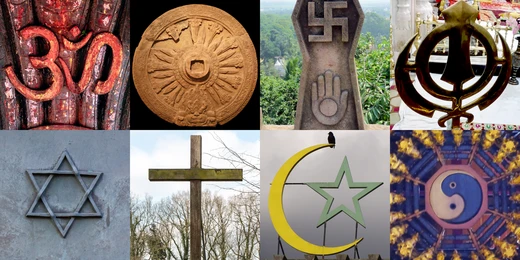
Unitarian Universalism stands apart in the religious landscape because it deliberately refuses to anchor its members to a single statement of belief or a fixed doctrinal framework. Rather than binding congregants to a creed, the tradition holds people together through shared covenants—mutual commitments grounded in love, inclusivity, and a commitment to social justice. This means that the spiritual life of one congregation might look radically different from another, and individual members may draw from an astonishingly wide spectrum of thought: agnosticism, atheism, Buddhism, Christianity, Hinduism, Islam, Judaism, New Age spirituality, neopaganism, nontheism, religious humanism, Sikhism, Taoism, and the teachings of the Baháʼí Faith all find a place within the tradition. There is no single sacred canon that every member must revere. Instead, the tradition maintains a deep regard for intellectual freedom, allowing each person to shape their own spiritual path while remaining in community. The result is a faith defined less by what it asserts and more by the values it upholds and the doors it keeps open.
Two Streams, One River: The 1961 Consolidation
Though both trace their lineage to liberal Christian theology, by the time of their union they had diverged considerably. New England Unitarians grew out of the Congregational Christianity of the Pilgrim Fathers, but they broke with that tradition by rejecting the Trinitarian understanding of God and the Calvinist doctrine of original sin, affirming instead a unitary conception of the divine. Universalists, for their part, pushed back against the Puritan emphasis on a limited Elect saved from eternal damnation, proclaiming that every human soul would ultimately be reconciled with God.
Worship Without a Fixed Canon
Because Unitarian Universalism has no official, unified corpus of sacred texts, its worship life is shaped by local creativity and a broad willingness to seek inspiration across the world's religious traditions. Services may be held in churches, fellowships, congregations, or societies, and while many retain familiar Christian elements—Sunday gatherings, a spoken sermon, the singing of hymns—the degree to which any particular faith tradition is woven into a service is left to individual and communal choice. This non-dogmatic, creedless approach means that a single congregation might draw on Buddhist meditation, Jewish liturgical poetry, and Christian scripture within the same year, without any of those sources holding a privileged doctrinal status. That said, certain works have become touchstones within the tradition. John A. Buehrens and Forrest Church's A Chosen Faith is widely regarded as the classic introductory text on Unitarian Universalism, and The Unitarian Universalist Pocket Guide serves as a practical reference for members navigating the breadth of the tradition's spiritual landscape.
A Small but Global Community
Despite its broad philosophical reach, Unitarian Universalism remains a relatively small religious community. The Unitarian Universalist Association itself is headquartered in Boston, Massachusetts, and its member congregations are concentrated primarily in the United States. This modest but internationally connected structure reflects a tradition that values local autonomy while maintaining loose global ties.
Gallery




Frequently Asked Questions
What is a Church (congregation)?
A local church is a Christian community that gathers in a specific place for worship and ministry. It functions as the foundational organizational unit of Christianity and is distinct from the physical building often referred to as a 'church.'
What role does a Church (congregation) play in Christian life?
It serves as the basic unit of Christian organization, where believers meet regularly for worship, fellowship, and ministry. Congregations are typically governed by formal constitutions and by-laws and may be led by clergy or lay leaders.
How does a Church (congregation) differ from a church building?
The congregational sense of 'church' refers to the gathered people and their organizational structure rather than the architecture. The building is simply a venue, while the congregation is the living body of believers organized around shared faith.
Why is the Church (congregation) important in Christian ecclesiology?
It represents the practical, local expression of the broader Christian faith, making worship and ministry accessible within a specific community. Without this local gathering structure, the universal church would lack its foundational organizational layer.
What polity types can a Church (congregation) operate under?
Congregations may follow congregational, presbyterian, episcopal, or hierarchical governance models depending on their tradition. In many nations, they also pursue non-profit corporate status to handle legal and financial matters.
More in Religious Practices And Symbols 1-17
Spotted an error? Know more?
This is a living reference — every entry is fact-audited, and reader corrections feed straight into our audit queue. Suggest an edit · See this site's audit record